

Alumni Spotlight: Logan Howard
Tell us about your current role — what do you do, who do you serve, and what does a typical day look like?
I serve as the Director of Community Impact and Public Policy at Families and Youth Innovations Plus (FYI+), a behavioral health organization that has served Southern New Mexico for nearly 50 years. FYI+ is a certified community behavioral health clinic serving all of Doña Ana County regardless of ability to pay, offering everything from outpatient therapy and medication management to housing services. My role sits in what social workers would call the mezzo and macro space. I oversee our systems change wing, leading statewide policy work and region-wide program development on issues ranging from guaranteed basic income to community violence reduction. On any given day, I might be working alongside policy advocates and elected officials, leading our team of macro-focused social workers, or helping design programs that strengthen the broader system of care across eight counties. I also serve as an adjunct instructor for NMSU’s School of Social Work, so perhaps I will see you around!
What have you been working on lately that you're proud of or excited about?
Over the past few years, I have been building out the systems change wing at FYI+, and watching it grow has been one of the most rewarding experiences of my career. We now operate across eight counties in our mezzo scope and have become increasingly active at the state policy level, developing clear policy priorities and working alongside partners throughout New Mexico on a wide range of issues, including juvenile justice, public safety, LGBTQ+ rights, immigration rights, and more.
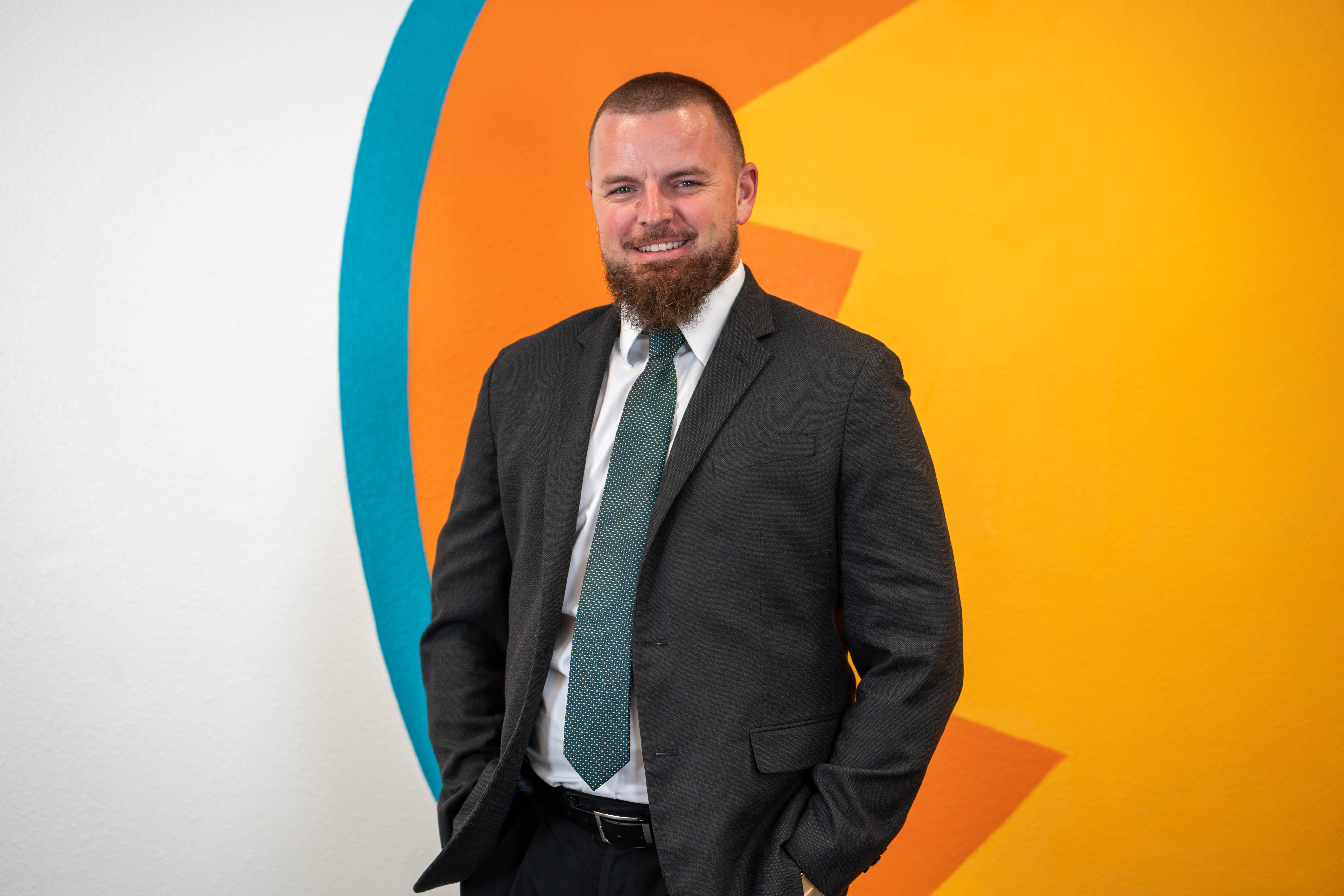
One of our most recent wins came out of this past legislative session: the passage of HJR 5, a resolution that will allow New Mexico voters to decide whether state legislators should earn a salary based on the state’s median household income. It is a powerful step toward modernizing our legislature and ensuring that public service is accessible to people from all walks of life, not just those who can afford to serve without pay.
How did your time in the NMSU Social Work program shape the practitioner you are today?
When I started at NMSU, I had no idea macro social work was where I was headed. The program gave me the space to explore clinical settings while also experimenting with community- and policy-level practice, and it was through that exploration that I found what truly lit me up.
My exit project became one of the most formative experiences of my career. I had the opportunity to work alongside multiple organizations to design and implement New Mexico’s first federally funded guaranteed basic income project. That experience gave me a foundation in systems-level thinking and collaborative practice that I still draw on every day.
What’s one lesson from your career you wish you'd known as a student?
The most important thing I have learned is that you will never have it all figured out, and that is not a failure; it is the practice. As a student, I put enormous pressure on myself to get everything right, to have a clear path and execute it perfectly. Years of practice have taught me that failure and struggle are not detours from the work; they are often where the deepest learning and growth happen. Leaning into discomfort, sitting with uncertainty, and allowing yourself to evolve is not a weakness — it is what makes you a better practitioner and a better leader.
Is there anything else you'd like fellow alumni or current students to know — about your work, your journey, or the field?
Social work is one of the most dynamic and expansive fields you can enter. Do not let anyone — including yourself — put it in a box. There are so many career paths available to you, and the best thing you can do early on is try as many as you can to discover what genuinely fills your cup. Do not settle for work that does not move you. The right work will call to you, align with your values, and connect to your sense of purpose. When you find it, it will not feel like a job in the way you might expect.